Skip to main content
Applied Mathematics and Computational Science
Applied Mathematics and Computational Science
Study
Prospective Students
Current Students
Research
Research Areas
Research Groups
People
All People
Faculty
Affiliate Faculty
Research Faculty
Instructional Faculty
Research Scientists
Research Staff
Postdoctoral Fellows
Administrative Staff
Alumni
Students
News
Events
SIAM Student Chapter
CEMSE Division
About
Apply
non‐fullerene organic
Fully Inkjet‐Printed, Ultrathin and Conformable Organic Photovoltaics as Power Source Based on Cross‐Linked PEDOT:PSS Electrodes
1 min read ·
Mon, Jun 15 2020
News
Biosensors
non‐fullerene organic
P3HT
Electrochemical Sensors
solar cells
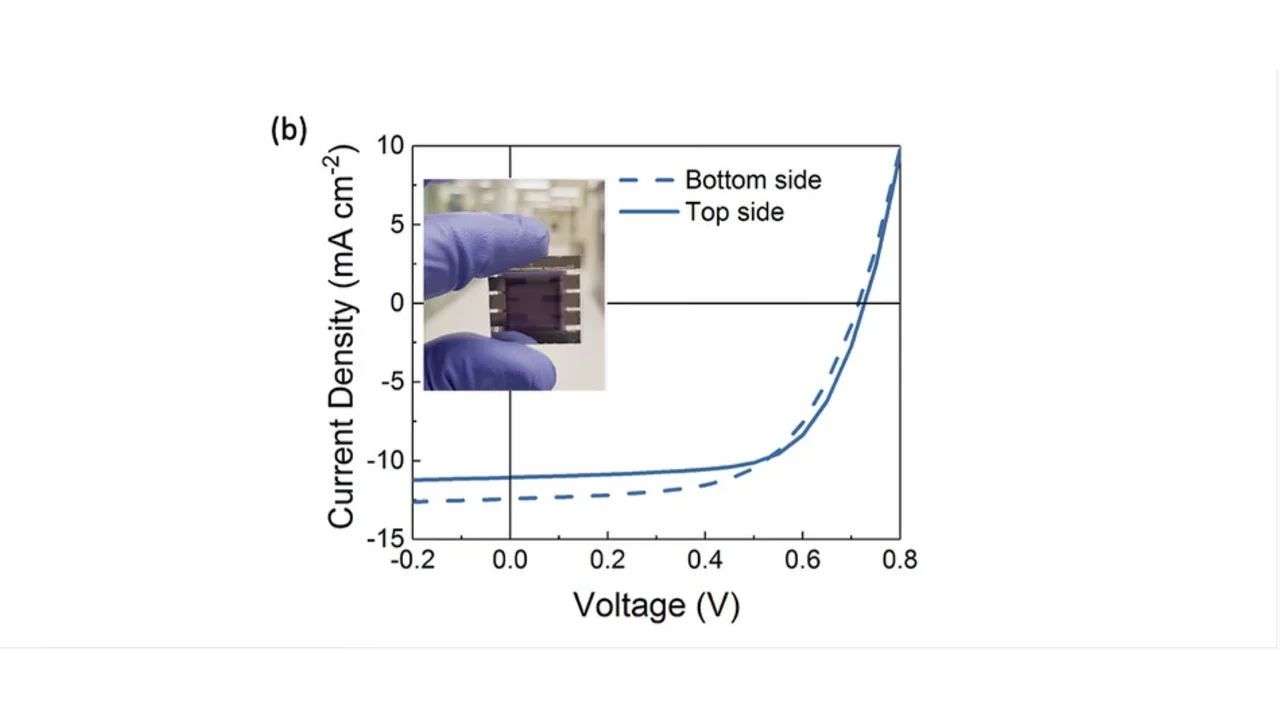
Eloïse Bihar, et al., "Fully Inkjet‐Printed, Ultrathin and Conformable Organic Photovoltaics as Power Source Based on Cross‐Linked PEDOT:PSS Electrodes" Advance Material Technology 2000226 , 2020, 1. Ultra‐lightweight solar cells have attracted enormous attention due to their ultra‐conformability, flexibility, and compatibility with applications including electronic skin or miniaturized electronics for biological applications. With the latest advancements in printing technologies, printing ultrathin electronics is becoming now a reality. This work offers an easy path to fabricate indium tin